"Chorompotro, Shobdo Soinik names are given by me"
Augustin Sujan || risingbd.com
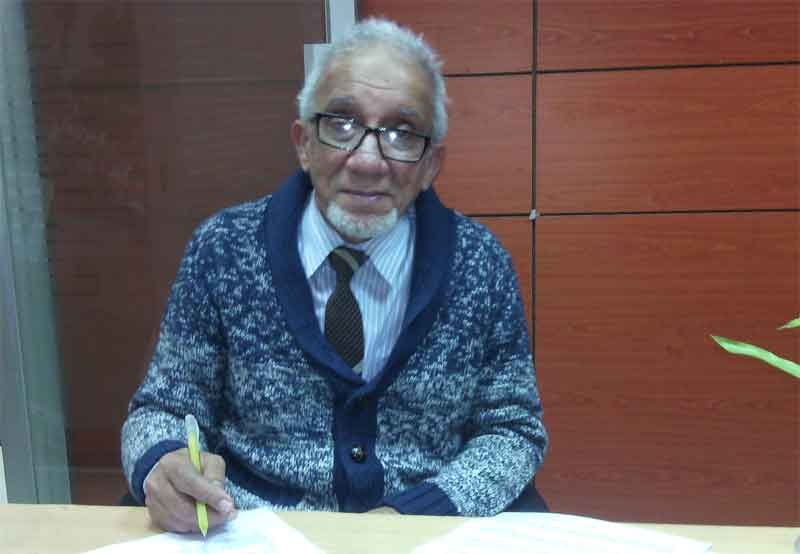
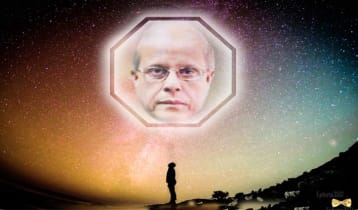
Ashfaqur Rahman Khan
M R Akhtar Mukul’s Chorompotro (the extreme letter), Kolyan Mitra’s Jollader Dorbar or Ora Manush Hotta Korese Asun Amra Poshu Hotta Kori remind the memorable times of Shwadhin Bangla Betar Kendra (the Radio Station of Bangladesh during the War of Liberation).
The programs of Shwadhin Bangla Betar Kendra encouraged the people of the country during the Liberation War. By listening the programmes people got aspiration and in this case Chorompotro kept an unforgettable contribution in the history of Bangladesh.
The name Chorompotro (the extreme letter) was given by the programme presenter and manager Ashfaqur Rahman Khan. Recently the legendary Shobdo Soinik gave an interview to popular news portal risingbd.com. Taposh Roy, a Senior Sub Editor of risingbd.com interviewed him.
Taposh Roy: How did you join with Shwadhin Bangla Betar Kendra?
Asfaqur Rahman: When Awami League achieved absolute majority in 1971 but then Pakistan President Yahya Khan postponed the National Assembly of March 1, 1971 indefinitely. The non-cooperation movement led by Sheikh Mujibur Rahman started on March 2. I worked at Pakistan radio of Shahbagh station which was an institution under the central government of Pakistan. Responding to the non-cooperation movement of Bangabandhu, all the radio workers abandoned the word ‘Radio Pakistan’ and changed it with Dhaka Betar Kendra (Dhaka Radio Station). Chittagong, Rajshahi, Rangpur, Sylhet, Khulna followed the same way.
Sheikh Mujibur Rahman declared the next course of actions through the historical speech of March 7. I decided to broadcast the speech secretly as we had a fear that the Pakistan authority may not permit us to broadcast the speech and at one stage the apprehension became true. We were not allowed to broadcast the speech. Protesting the decision of the then Pakistan government, we went on strike and left work station.
Later, the chief military officer Farman Ali met our demand and the speech of Bangabandhu was broadcast on March 8 at 8:30am. I think it was our first victory but at one stage we understand that step by step the situations becoming complex. On March 25, Pakistani military started operation search light and killed innocent unarmed people and father of the nation Banglabandhu declared the independence of Bangladesh. The curfew was underway in the confined Dhaka city. On March 26, radio station workers of Chittagong Kalurghat, with the initiatives of radio workers, political leaders and general people, started Biplabi Shwadhin Bangla Betar Kendra to spread the declaration of independence of Bangladesh to the country men and world. Later, the word Biplabi (Revolutionary) was cut off from the name. On March 30, Pakistani military destroyed the radio center by an air attack.
Later, Indian government gave a strong transmitter to Bangladesh government after the formation of Mujibnagar government during the war. Actually Tajuddin Ahmed requested the then Indian Prime Minister Indira Gandhi for that. Meanwhile, the radio workers of Chittagong and other stations went to Mujibnagar. This way I joined with Shwadhin Bangla Betar Kendra.
Taposh Roy: How did you start it at Kolkata?
Asfaqur Rahman: Proudly we can say that we don’t want anything except a transmitter. The first session was started on May 25, the birth anniversary of Kazi Nazrul Islam. On that day we made a programme with two songs and a poem of the poet. The work started in a two-storied building at Circular Road of Ballygunge of Kolkata. It would be sound strange that president and other ministers lived in the same building. The transmission started in a 10/12 foot room of the building. Some of us had to pass night in the floor of the room. There was no other system to control sound even we had no musical instruments.
Taposh Roy: How did a radio station started transmission without these equipments?
Asfaqur Rahman: Yes. Such types of thinking make us surprise. I stole a tape of songs from Dhaka radio station with T H Sikdar, Taher Sultan, Shahidul Islam and Manzur Quader. It was a life threatening task for us but we succeeded to do that.
Taposh Roy: What type of things was important to you in making a programme?
Asfaqur Rahman: There was no scope of think like that. We worked there spontaneously. Our aim was to encourage the moral of the countrymen, to destroy the mental strength of enemy. We broadcast the successful news of freedom fighters even we translate the news into English for the world.
Taposh Roy: Many people compared Shwadhin Bangla Betar Kendra with the battlefield sector. Are there any feelings about the memories?
Asfaqur Rahman: I agree with the words. It was also a Warfield. It was a mental war for us. A compilation was made after the Liberation War. First time I gave a name of the compilation ‘Shobdo Soinik’ (Word Soldier). I am always hopeful. When I saw the Gonojagoron Moncho was formed at Shahbagh, then I realized that the new generation is rising with the spirit of 71. So there is nothing to lose hope.
Taposh Roy: So many private radio stations are working in the country now. Can they inspire the audience with patriotism?
Asfaqur Rahman: Most of them are busy to broadcast mixed words ‘Banglish’ (Bangla+English). They want to follow Radio Mirchi which is not fair because following others cannot bring good result. Although I am hopeful as evil things will be washed away someday.
risingbd/DHAKA/Dec 21, 2014/Taposh Roy/Nasim/Augustin Sujan
risingbd.com